Behoorlijk organiseren

Een pleidooi voor algemene beginselen van behoorlijk organiseren in het publieke domein

Harry ter Braak & Alinda van Bruggen | 2026
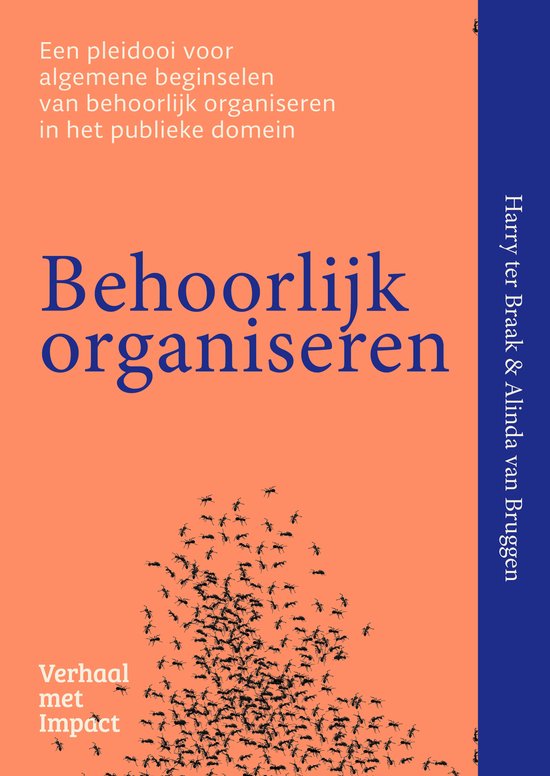
De algemene beginselen van behoorlijk bestuur en diverse governancecodes zijn binnen het publieke domein gemeengoed. Maar over algemene beginselen van behoorlijk organiseren heeft niemand het. Toch is daar alle aanleiding voor. Bijna een miljoen ambtenaren werken in Nederland dagelijks met veel energie in publieke organisaties.

Veel gaat goed, maar te vaak ook gaat het mis, met de burger als slachtoffer. Denk aan de moeizame compensatie van de aardbevingsschade door gaswinning, problemen in de jeugdhulpverlening, de toeslagenaffaire en ander groot of kleiner falen van publieke organisaties.

Dit boek is een pleidooi om algemene beginselen te definiëren voor behoorlijk organiseren voor het publieke domein. De algemene beginselen:

  • Feedbackbeginsel
  • Systeemintegriteitbeginsel
  • Scopevastheidbeginsel
  • Symmetrischemachtbeginsel
  • Logischeprikkelbeginsel
  • Contextbeginsel
  • Verantwoordelijkheidsbeginsel
  • Contributiebeginsel
  • Rentmeesterbeginsel
  • Transparantiebeginsel
  • Informatiebalansbeginsel

Organisatieadviseurs Harry ter Braak en Alinda van Bruggen doen een stevig onderbouwde voorzet. Ze formuleren elf beginselen en laten met voorbeelden zien hoe die door allerlei dynamieken binnen organisaties in de knel kunnen raken. Vervolgens bieden ze handelingsperspectief om een adequate invulling te geven aan elk beginsel. Samen vormen de algemene beginselen van behoorlijk organiseren een normatief kader voor de manier waarop de overheid zich organiseert. Intern en in relatie tot de burger.

Behoorlijk organiseren biedt houvast aan iedereen die binnen (semi-)publieke organisaties de goede dingen goed wil doen.

Bibliografie

Ter Braak, H., & Van Bruggen, A. (2026). Behoorlijk organiseren: Een pleidooi voor algemene beginselen van behoorlijk organiseren in het publieke domein. Verhaal met Impact.

Webstie Behoorlijk Organiseren.

The Public Design Evidence Review: Public Value

UK Cabinet Office | July 2025

PRIMO: “We talk a great deal about what is going wrong. About the countless threats of today and the risks of tomorrow facing our society, our ecosystems and our climate. A constant stream of analyses and opinions appears every day in the media and on social media. They are all true and reflect concern and even anger. There is criticism of our political leaders, who, in the eyes of many, are not making much of a difference, because they are heavily influenced by powerful lobbies representing large corporations and oligarchs. A veritable deluge of emotions.

I advocate a renaissance of public value, its design and its management. In other words, reconsidering and acting from the ground up. This publication is right up our street. This report examines the concept of ‘public value’, its origins, how it is measured and its application in public administration, with an emphasis on the need for professionalisation to improve the delivery of public value.

PRIMO shifts its focus from risk (potential damage to public value) to the value itself. This is because it places a much stronger emphasis on managing that value and highlights the wide range of factors that influence that management. It also makes better use of Mark H. Moore’s leading expertise in public administration and his scholarly approach. Furthermore, it places greater emphasis on the here and now, rather than on tomorrow and the day after. It focuses more on certainties and knowledge, and less on so-called uncertainties. It puts us in the driving seat rather than leaving us drowning in the immense abyss of what might happen. It puts our hands on the wheel.

The Public Design Evidence Review (PDER) explores the role and value of design in the public sector. An overview of the report package can be found below.

“This document is the second of three literature reviews commissioned by the cross-government Policy Design Community and written by an interdisciplinary team of academics. It discusses the concept of public value, its origins, measurement, and application in public administration, emphasising the need for professionalisation to enhance public value delivery. The wider project was commissioned as a non-exhaustive exploration of the relationship between public design and public value. It was conducted within rapid timeframes and prioritised cross-disciplinary working.

Lees verder →

Certificate in ESG Risk Management

September 2026

PRIMO Res Publica is happy to support and promote a new online course, focused on the topic of ESG, the Environmental, Social, and Governance framework used by investors and businesses to evaluate an organisation’s ethical and sustainable impact. In the view of our foundation, this framework is one of the highest ethical starting points, set of constraints and forms, like the Sustainable Development Goals developed by the United Nations, that lead to establishing public values. The risks related to these values are essential to measure, understand and act upon.

This course gives a perfect overview of the world of ESG and SDG and is highly recommended for all employees, managers and governors not only in business but even more so in the public and non-profit organisations. It is our Earth and the lives of the people, communities and our children and grandchildren that count. You are invited.

“The Certificate in ESG Risk Management is now open. It is the first certificate SRLA has co-awarded — with the Malta Association of Risk Management and ATCS Consultancy Ltd — and as someone on this list, you can take it for €200 instead of €250 with the code SRLA2026, until 30 September.

Lees verder →

PRIMO is leaving ISO 31000 behind

PRIMO Res Publica | August 2026

The new draft ISO 31000 (2026) is moving further away from PRIMO’s approach to the issue of public values (and their associated risks). The framework remains too organisation-centred, fails to focus on the public domain and lacks the tools for systemic thinking with regard to public values. The framework was launched in 2009 and updated in 2018 in an attempt to give ‘risk’ a central place in the guidelines amidst the many other ISO frameworks. In the public sector, due to its lack of integration with core processes, it has never really taken root in the world of politics and governance. Furthermore, because of its general nature, it is a framework that cannot be certified, unlike other more specialised and specific frameworks, and partly for this reason it is not really usable.

With the new 2026 update on the horizon and the framework appearing to become increasingly isolated within its own world of risk management, it is time for some reflection. The conclusion:

PRIMO Res Publica does not recommend the use of the ISO 31000 framework for public organisations.
Lees verder →

PRIMO laat ISO 31000 achter zich

PRIMO Res Publica | augustus 2026

Het nieuwe concept ISO 31000 (2026) komt verder en verder weg van hoe PRIMO het vraagstuk van publieke waarden (en hun risico’s) benadert. Het raamwerk blijft te veel organisatiegericht, heeft het publieke domein niet in de focus en ontbeert de handvatten voor systemisch denken met betrekking tot publieke waarden. Het raamwerk is in 2009 op de markt gekomen en in 2018 geactualiseerd als een poging om ‘risico’ een centraal podium van richtlijnen te geven te midden van de vele andere ISO-raamwerken. In de publieke sector is het door zijn gebrek aan koppeling met primaire processen nooit echt geland in de wereld van politiek en bestuur. Het is door zijn algemeenheid ook een raamwerk dat niet certificeerbaar is, in tegenstelling tot de andere meer toegewijde en specifieke raamwerken en mede daardoor niet echt bruikbaar.

Met de nieuwe 2026 update in het vooruitzicht en het raamwerk zich verder lijkt te isoleren in de eigen wereld van risicomanagement, is het tijd voor een reflectie. De conclusie:

PRIMO Res Publica ontraadt het ISO 31000-raamwerk voor publieke organisaties.
Lees verder →

Kernwaarden in retrospectief

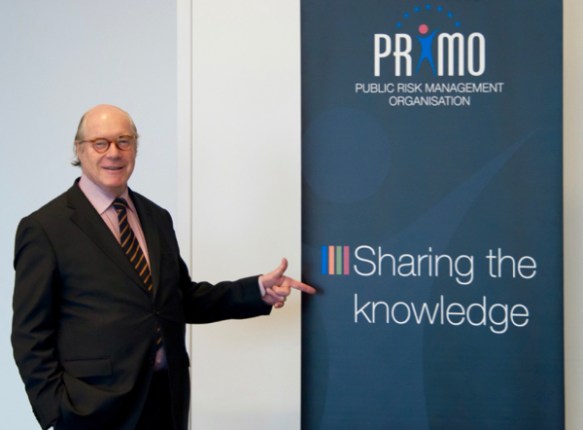
Eric Frank bij 10 jaar PRIMO Nederland*

Na het lezen van vele honderden essays, rapporten en boeken in het proces van ordenen en cureren voor het internationale PRIMO-netwerk, de conclusie is dat deze vereniging zich primair heeft gericht op publieke waarden en de besturing om er te komen.

Het gaat daarbij in feite over het afstemmen van zes kernwaarden, zijnde (1) het dienen van bestuur en bestuurder zelve, (2) het verfijnen van het proces van besturing en haar zorgvuldigheid, (3) het bereiken van burger, bedrijf en samenleving, (4) het scheppen van de waarde in product en dienst op zich inclusief de levering (output), (5) het bereiken van de beoogde outcome bij de doelgroep en (6) het dienen van de systemische balans waarbinnen dit gebeurt.

Voormalig directeur van PRIMO Nederland, Eric Frank, verwoordt het goed bij het tienjarig bestaan van de vereniging in 2016. Het gaat niet om het beheren van risico’s – dat is een vorm van verzekeren – maar om het behalen en borgen van publieke waarden. Daarom heeft PRIMO in 2024 het accent opnieuw gelegd op ‘res publica’, de publieke zaak.

Lees verder →

About ‘Public Risk’

Board of PRIMO Europe | April 2007

Introduction

During the founding of the idea of PRIMO in Strasbourg on the 1st of April 2005, the need for design principles related to the governance of public risk was extensively discussed. We, to be precise the executive committee of the European Association of Local Chief Executives UDITE, defined it as a form or way of working towards the prevention and reduction of possible hazards and risks (i.e. a measure of hazard) in our (European) cities, to build public trust on values like safety, quality of life, protection and coherence in society. In 2020, we reflect on and specify these principles.

A myriad to deal with

Based on experiences in this network we conclude that most of the public leaders and managers we meet – and if we ask them in our Public Risk Forum, round tables and thinktanks -, define risk all in their own way. It is a myriad of definitions and perceptions. We guess there are 100 different definitions of risk around, all based on unique principles, perspectives, angles, and driven towards further segmentation by a myriad of advisors, trainers, scientists (o, yes), and software developers.

Lees verder →